

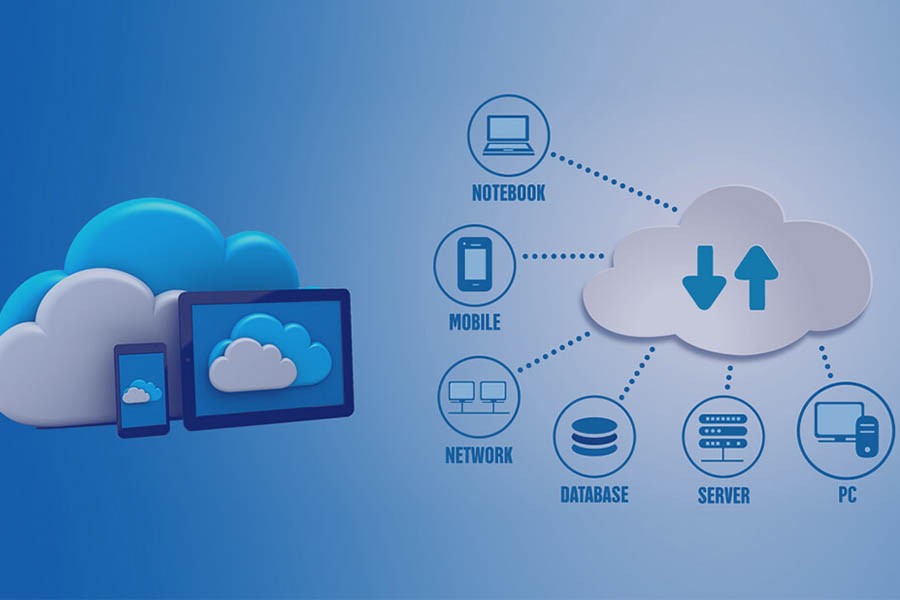
Cloud and local servers
Servers are powerful computers that store data, run applications, and provide services to users. Servers can be mainly classified into two types: cloud servers and on-premises servers.
Cloud Servers
• Definition: These are servers that are rented over the Internet from cloud service providers such as Amazon Web Services (AWS), Microsoft Azure, and Google Cloud Platform.
• Advantages:
o Flexibility: You can increase or decrease computing resources as needed.
o Availability: The service is available 24/7.
o Cost reduction: You only pay for the resources you use.
o Ease of management: The cloud service provider manages the infrastructure.
• Uses:
o Hosting websites and applications.
o Data storage and backup.
o Big data analysis.
o Application development.
On-premise Servers
• Definition: These are servers that are installed and operated within the enterprise or organization.
• Advantages:
o Complete control: You have complete control over the data and infrastructure.
o High performance: The server can be customized to meet your specific needs.
o Enhanced security: You can apply strict security measures to your data.
• Disadvantages:
o High costs: Requires significant investments in purchasing, operating, and maintaining servers.
o Difficulty in management: Requires high technical knowledge to manage servers.
• Uses:
o Applications that require a high level of security and privacy.
o Business environments that require high performance.
o Applications that require complete control over the infrastructure.
When to choose a cloud server and when to choose an on-premises server?
• Choose a cloud server if you:
o Looking for flexibility and low costs.
o You don’t need a high level of control over the infrastructure.
o Need to access data from anywhere.
• Choose an on-premises server if you:
o Need a high level of security and privacy.
o Need high performance and customized applications.
o Have a large budget to invest in infrastructure.
Ultimately, choosing the right type of server depends on your specific needs and budget. It may be best to use a combination of both types to get the most out of it.


